What is the Disability Smart Framework?
Our Disability Smart Management Tools (available to Members and Partners) help you to understand how well your organisation is performing when it comes to disability inclusion.

If you want to find out how your organisation is doing on disability inclusion, then the Disability Smart Self Assessment is the place to start. Follow this with an in-depth Disability Smart Audit to help you measure and improve and use the Disability Smart Toolkit to support you through the process. If your organisation is mulitnational, use the Global Disability Smart Assessment.
What is the Disability Smart Framework?
At Business Disability Forum, we build our work around the Disability Smart Framework, which considers disability inclusion across 10 business areas that are common across all organisations. By considering disability inclusion systematically, accessibility and inclusion can be truly embedded in everything an organisation does.
This framework is the foundation of our Disability Smart Assessments, which offer an effective, expert-led way of understanding how your organisation is doing on disability inclusion.
Business areas
The 10 business areas are:
- Communications
- Customers and service users
- Employee experience
- Leadership, culture and strategy
- Learning and development
- Premises and facilities
- Procurement
- Recruitment
- Technology
- Workplace adjustments and accommodations
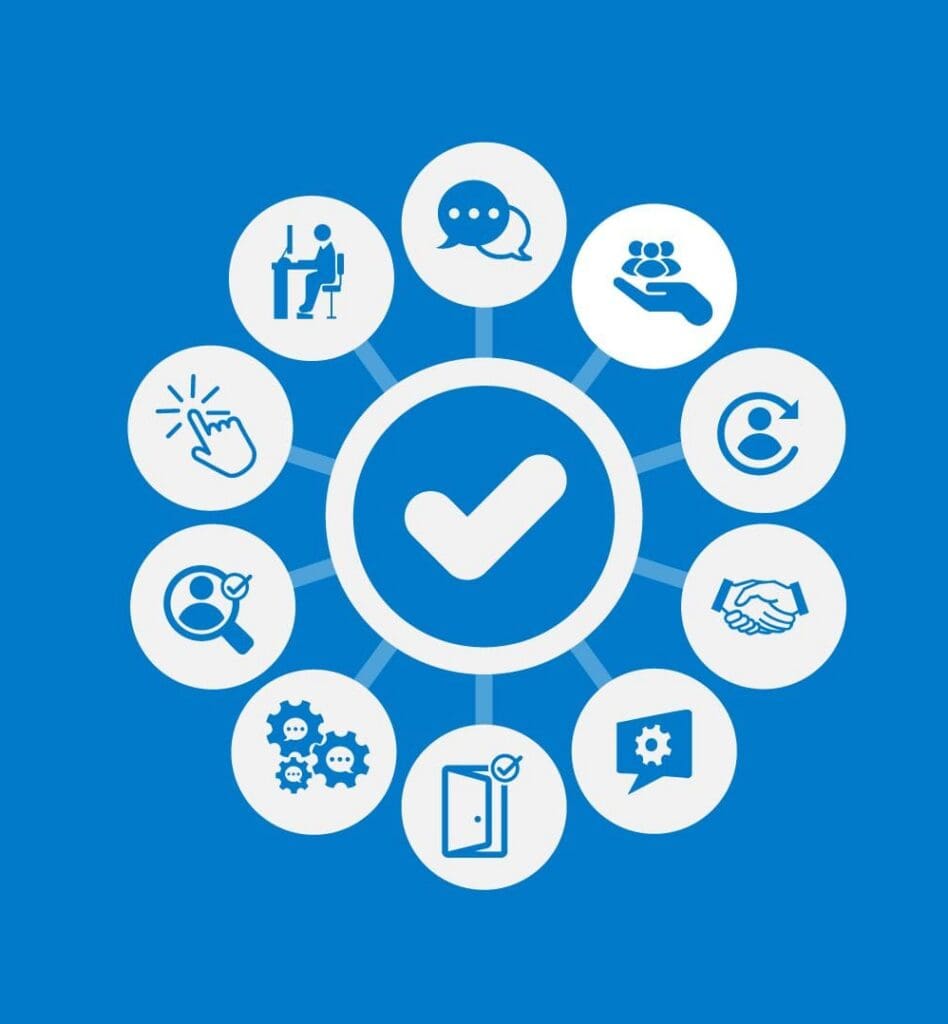
You can read more about what each of these areas covers below.
Communications
Accessible communications are essential to provide everyone with equitable access to information. Disabled people will quickly be excluded if you do not make sure your communication channels are accessible, and that adjustments are made where required.
This area focuses on ensuring your internal and external communications – including marketing, imagery, websites and documentation – are accessible to and inclusive of disabled people. This includes:
- Accessible formats (e.g. documents, videos and digital content).
- Inclusive language.
- Inclusive imagery.
- Accessible websites and digital communications.
- Inclusive meetings and events.
Customers and service users
Disabled customers and service users are an important part of your organisation’s audience, and their needs should be considered at every stage of the design and delivery of products and services.
This area focuses on delivering inclusive and accessible products, services and support to disabled customers, consumers and service users. It includes:
- Inclusive product and service design.
- Accessible customer journeys and touchpoints.
- Customer support and service delivery.
- Understanding disabled customer needs and behaviours.
Employee experience
A positive employee experience improves performance, engagement and retention.
This area focuses on creating positive experiences for disabled employees across the full employee lifecycle through inclusive policies, processes and supportive line management. It covers how to remove barriers to career development and progression, and how organisations can manage and support absence appropriately. It also includes guidance on supporting employees through times of change, such as redundancy and redeployment, in a fair, inclusive and dignified way. It includes:
- Policies and processes (e.g. absence, performance, progression, redundancy and redeployment).
- Line management.
- Career development and progression.
- Workplace support and inclusion in practice.
Leadership, culture and strategy
Organisations require strong leadership to create an inclusive culture, and to embed commitment to disability inclusion consistently across an organisation.
This area focuses on leadership, organisational culture, and the development of a disability inclusion strategy informed by data and lived experience. It also covers how organisations establish accountability, measure progress and capture and act on employee voices. This includes:
- Leadership capability and accountability.
- Organisational culture and behaviours.
- Disability inclusion strategy.
- Governance, data and measurement.
- Employee voice mechanisms (e.g. ERGs).
Learning and development
Employees need the knowledge and confidence to work in a disability-inclusive and accessible way – they need to understand your commitment to best practice and be confident interacting with disabled people. Disabled employees must also be supported to access development opportunities and progress in their careers.
This area focuses on ensuring people across your organisation are educated on disability inclusion, that learning and development is accessible, and that disabled employees have equitable access to development opportunities. It includes:
- Disability inclusion training and awareness.
- Accessible learning design and delivery.
- Confidence and capability building.
- Development opportunities for disabled employees.
Premises and facilities
Disabled people should have equitable access to your physical environments, with an experience that is comparable to other visitors and preserves dignity.
This area focuses on procuring accessible premises, improving existing environments, and managing facilities in a way that is inclusive of disabled people. It includes:
- Procuring accessible premises (e.g. offices, shops, warehouses and other physical sites).
- Accessible building design and infrastructure.
- Facilities management and maintenance.
- Emergency procedures (e.g. PEEPs).
Procurement
It is important that your suppliers and partners reflect your values and support your commitment to disability inclusion.
This area focuses on how to work with suppliers, partners and vendors to embed disability inclusion at every stage of your supply chain. This includes:
- Inclusive procurement policies and processes.
- Supplier expectations and standards.
- Contracting and accessibility requirements.
- Monitoring and accountability within the supply chain.
Recruitment
Removing barriers in your recruitment processes is essential to access the widest possible talent pool at every level.
This area focuses on how to attract, recruit and onboard disabled people. It includes:
- Inclusive attraction and outreach.
- Accessible recruitment processes.
- Fair and inclusive selection methods.
- Inclusive onboarding and pre-employment support.
Technology
The technology used in your organisation must be accessible, usable and inclusive by design.
This area focuses on identifying and removing barriers within technology for disabled employees and customers. It includes:
- Accessible IT systems and platforms.
- Assistive technology and workplace tools.
- Digital accessibility standards (e.g. WCAG).
- Artificial intelligence.
- Emerging technologies
Workplace adjustments and accommodations
Providing adjustments and accommodations is a key mechanism to reduce barriers and ensure equitable access to work, enabling disabled people to perform at their best.
This area focuses on ensuring you have a robust and effective process for providing adjustments and accommodations to remove barriers for anyone working in your organisation. It includes:
- Adjustment processes and policies.
- Types of workplace adjustments (physical, digital, procedural etc).
- Funding and support mechanisms.
- Monitoring effectiveness and continuous improvement.
Disability Smart Self-Assessment
Assess how your organisation is doing against ten business areas using the Disability Smart Self-Assessment tool.
Containing just over 130 questions, you can complete it in your own time and with input from colleagues. You don’t have to answer everything in one go, and the questions are reviewed and refreshed regularly to reflect changing working practices.
Disability Smart Audit
Measure and improve your performance on disability inclusion by requesting a Disability Smart Audit. This in-depth organisation-wide audit is carried out by one of our Senior Business Partners.
Disability Smart Toolkit
Our Disability Smart Toolkit contains a range of videos, factsheets, webpages and case studies to help you complete the self-assessment or audit.
Our Disability Smart Management tools are free to access for Members and Partners. Find out more about membership.
Business Disability Forum’s Global Disability Smart Assessment
Our Global Disability Smart Assessment is designed for multinational, matrixed organisations to measure and improve their performance on disability inclusion – for disabled customers, clients, service users, employees and other stakeholders. It helps you assess how disability-inclusive your organisation is both at headquarters and across key international markets, providing a clear picture of where to focus your global disability-inclusion strategy.
If you require this content in a different format, contact [email protected].
Highlighted content

Changing the image of disability

Disability Smart Impact Stories