Working with researchers
Learn how we work with researchers and academics, and how you can get in touch if you'd like to collaborate with us.
Collaborating with researchers
Although we are a small team, we are happy to discuss research collaborations that produce original insights and practical, helpful solutions that benefit business, disabled people, and UK Government policy development. We value evidenced-based, credible, thought-leading research from academia, think tanks, businesses, and third sector led projects. We regularly sit as non-academic advisers on research teams, and we are happy to share our expertise on research design and disability and health inclusion with Members and Government.
Collaborating with researchers and academics
We believe in constructive debate and in presenting all options available when working on policy solutions. We therefore enjoy respectful challenge, and helpful, collaborative disagreements. We treat differences of opinion with respect and, more than this, we value them and seek them out. We believe differences of opinion help us make potential solutions and policy developments all the more robust (and fun).
If this matches your approach, and you would like to discuss opportunities to collaborate, please get in touch by emailing us at [email protected]
Asking us to share surveys or recruit research participants
We are contacted almost daily by academics and researchers with requests for our Members to take part in surveys or qualitative research activities, but without wanting BDF’s involvement in the project more widely.
We reserve recruiting research participants and promoting surveys for the projects that we are also involved in. This is so that we do not inundate our membership with research requests alongside them taking part in our own research projects.
Asking us to share research outputs
We are usually happy to share research outputs with our members and in our newsletters, as long as they are accessible and relevant to BDF’s work. If you would like us to do this, please email us with the following:
- A Plain English word summary of no more than 400 words which explains your project, why you are doing it (or did it), and what you want your intended audience to do as a result (what the learning from your research is).
- Information about how readers can contact you to follow up or request your research output in a different way that is accessible to them.
Please also feel free to send us your research papers for our policy and research team to read ourselves. The team enjoy reading them and like to hear about emerging knowledge and new approaches.
A note on jargon
Please note that our Members and non-policy networks may not be familiar with academic, technical vocabulary, or subject specific jargon. You are likely to get better engagement and return on requests if your information is short and instructions are clear. This includes finding a way of talking about data protection, confidentiality, harm, and ethics approval in a succinct and Plain English way.
A note on accessibility
Before you approach us with materials you would like us to share, please make sure they are in an accessible format. We will not promote any materials, survey requests, or content that is not accessible or where there is not a clear invitation for people to request a different version, or if the information is on a webpage or PDF that is inaccessible.
Please do not send us a covering email with just a survey link to share. Many survey links we are asked to share take users to a survey platform or host that is not accessible and does not provide a visible easy-to-access Accessibility Statement.
We are happy to circulate research outputs which add to policy solutions and practical outputs for businesses, but they must be presented in a way that disabled people can engage with.
If you require this content in a different format, contact [email protected].
Highlighted content

Disability inclusion for Desk-Free Workers
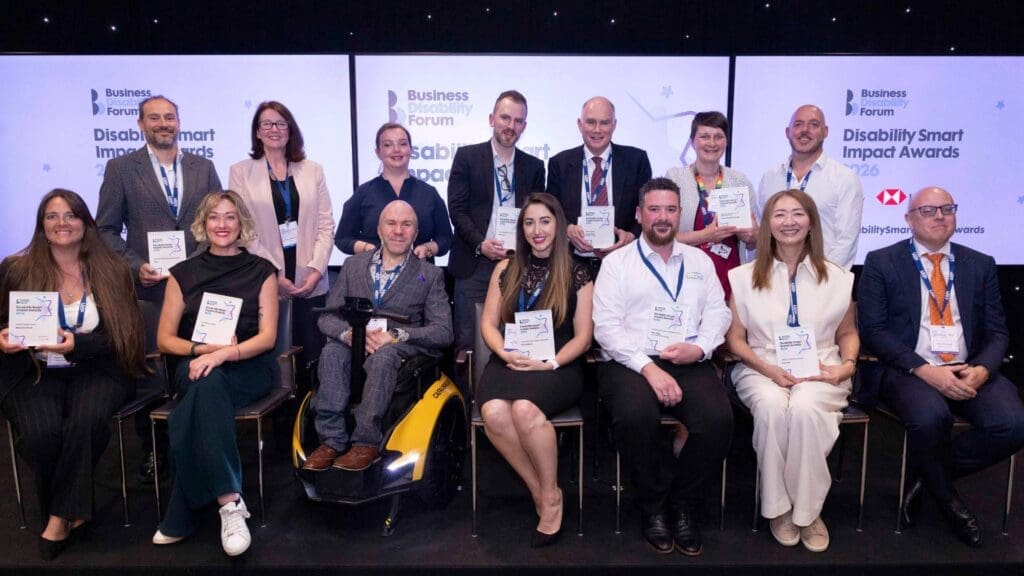
Disability Smart Impact Awards 2026 winners