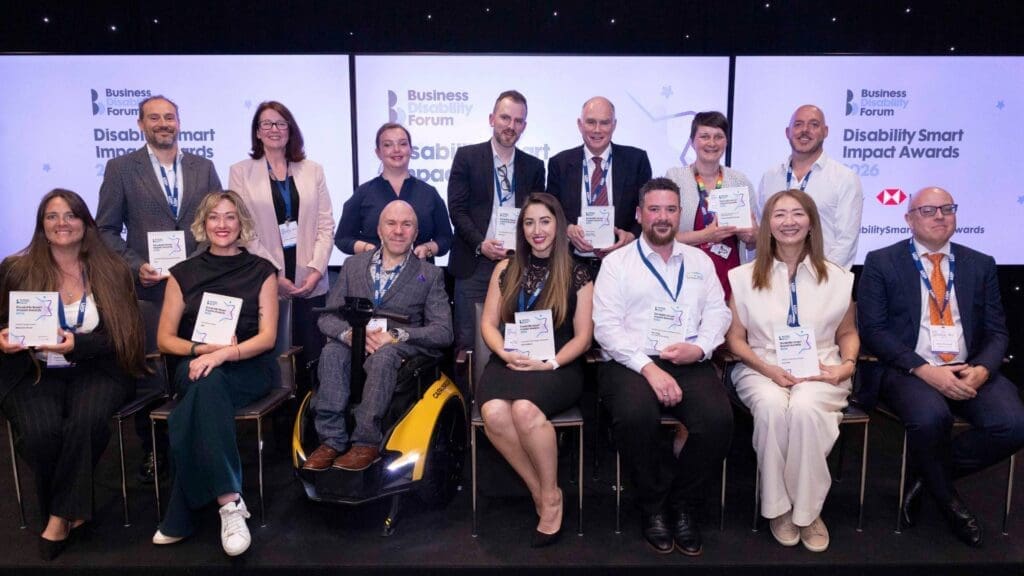
Customer Experience Award (small organisation) category winner: Accessible Housing Scotland
Recognised for transforming the housing experience for disabled people through personalised, end-to-end support that enables confident, informed decisions.

WINNER: Accessible Housing Scotland
About Accessible Housing Scotland
Accessible Housing Scotland (AHS) is a small specialist organisation that helps disabled people and their families navigate the housing market in a way that’s practical, informed and centred on what individuals really need.
They work with clients across Scotland, supporting people with a wide range of needs, including wheelchair users, people with progressive conditions, neurodiversity and families planning for future care. Instead of treating housing like a simple transaction, AHS focuses on understanding how someone lives now, how their needs may change, and what will genuinely work for them in the long term.
Issue
Housing is essential for independence and wellbeing, but disabled people are often left to deal with a system that’s confusing, inaccessible and stressful. Properties advertised as “accessible” often aren’t, communication from agents and landlords can be patchy, and people are frequently forced into rushed decisions with very little tailored support.
What they did
AHS set out to transform the experience of disabled people trying to find a home. They offer a fully personalised, end-to-end service that helps clients make confident, well-informed housing choices.
Instead of offering generic advice or simply searching for properties, AHS built a customer experience model based on the real challenges disabled people face in an often-inaccessible housing system.
It operates as a single, trusted point of contact, reducing the division clients typically face when dealing with multiple agents, landlords, local authorities and professionals. This integrated approach allows housing decisions to be considered alongside accessibility, future needs and emotional wellbeing, rather than in isolation.
One of AHS’s biggest innovations is carrying out accessibility assessments early in the process. Properties are evaluated for suitability before clients commit time, energy or hope to viewings that are unlikely to meet their needs. AHS actively avoids assumptions about capability, priorities or timelines. Clients are supported to make decisions at their own pace, with clear explanations of options and implications. This is particularly important for those dealing with recent diagnoses, progressive conditions or significant life changes, where housing decisions can feel overwhelming. This prevents repeated disappointment and significantly reduces stress, particularly for clients with limited capacity or urgent circumstances.
Impact
Clients consistently say they feel less stressed, more confident and clearer about their options when making housing decisions. AHS also operates on the principle that moving home isn’t always the right option. In many cases, they support their clients to explore adaptation options or alternative arrangements that are more suited to their needs. Listening, judgement and adaptability are more important than technology, standardised processes or the number of transactions completed.
From the start, clients are encouraged to share how they live, what challenges they face, and what matters most to them. Communication is adapted to suit individual preferences and needs, whether that involves taking extra time, simplifying information, involving family members or carers, or providing written follow-ups for clarity.
By assessing accessibility early and acting on behalf of clients, AHS has helped people avoid unsuitable homes, unnecessary moves and costly mistakes. For many, this has meant securing homes that genuinely meet their needs or identifying adaptations that allow them to remain in familiar surroundings for longer.
Clients facing urgent or emotionally complex situations have benefited from having a calm, knowledgeable guide through a difficult process. This support has been particularly impactful for people with progressive conditions, where future-proofing housing decisions is critical.
Every successful case is more than just finding the right property – it’s an improvement in someone’s independence, safety and wellbeing. The organisation’s work often has ripple effects, reducing pressure on families and support services by helping clients make sustainable choices.
If you require this content in a different format, contact [email protected].
Highlighted content
Changing the image of disability
Disability Smart Impact Stories